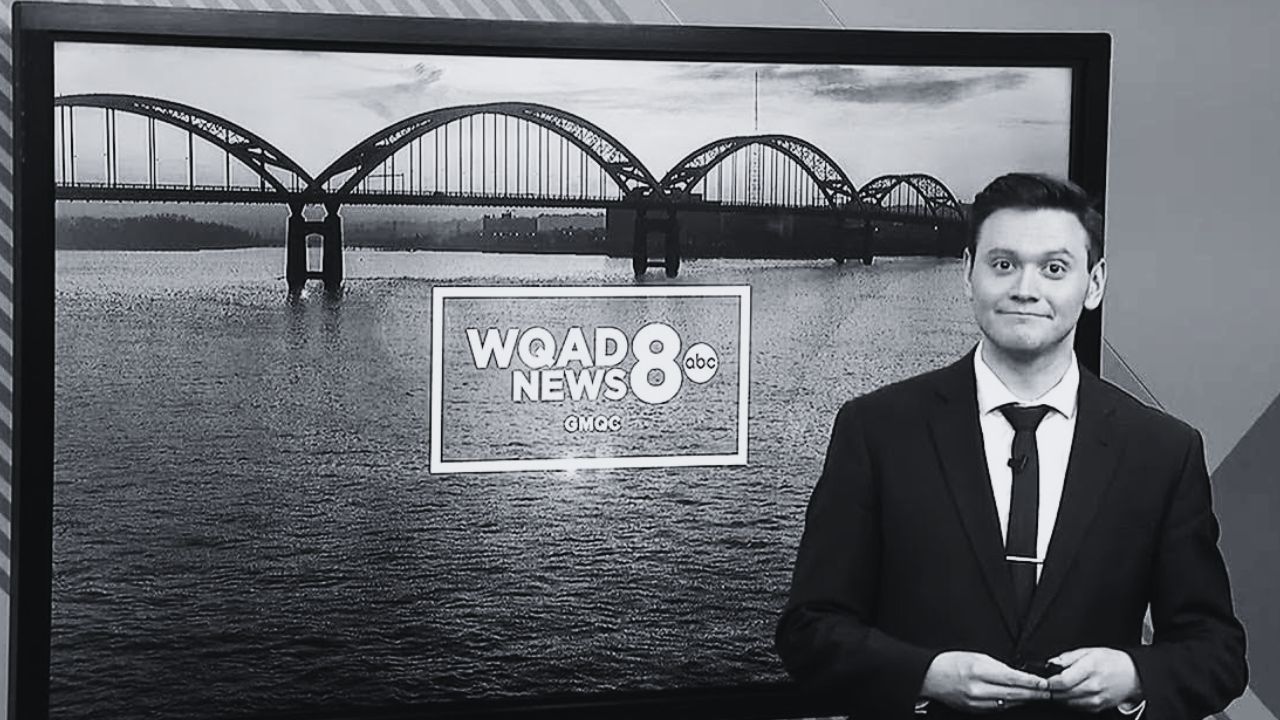


You’ve seen the rumors. Social media posts. Maybe a neighbor complaining at the grocery store about “all the anchors” leaving WQAD. Suddenly, the mood in the Quad Cities feels like local news panic season is here. But: Is there a mass exodus at the station, or is this just the usual background hum of the TV news business?
Quick reality check—a few high-profile exits do not equal chaos. Staff movements at WQAD are getting attention, but most are more career shuffle than crisis. Let’s sort the facts from the hand-wringing, and see what’s actually happening behind the teleprompter.
What’s Up at WQAD? The People Moves
Start with the loudest headline. Matt Randazzo, WQAD’s Sports Director and basically a newsroom fixture, announced his exit after over a decade. His reasons? Family. Routine. Ready for something new, per quotes to local outlets. That stings if you like your anchors to age in place, but it’s hardly the stuff of scandal.
Then there’s Shelby Kluver—whose own on-air goodbye to the 6:30 newscast fed the rumor mill. The kicker: she didn’t leave WQAD. Instead, she’s jumping into a new reporting project for the station. Not exactly a walkout, just…career growth.
Flip to morning shows—Jenna Webster made the leap from evenings to early AM. Josh Lamberty did the opposite, slotting into evenings after covering the dawn patrol. Both said the moves were about fit and opportunity inside the building, not some fiery exit interview.
Any other notable names gone? You’ll see some familiar faces shifting roles or—yes—leaving for a different job, but that’s what happens every year in local news. It makes sense if you know the business (and if you don’t, keep reading).
Management Gaps and How WQAD Handled Them
Here’s one twist causing real friction inside newsrooms: the manager merry-go-round. WQAD’s news director chair? Empty for months. Considering a news director is half coach, half traffic cop, and often the station’s culture officer, that’s not ideal.
The fix: WQAD’s general manager pulled in a temporary leader—someone with major-market chops—while the search committee combs LinkedIn and trade sites for a permanent hire. Corporate spin says this is “part of the normal cycle” in TV. Which, to be fair, it often is. But let’s not act like staffers don’t notice when there’s a gaping hole at the top of the org chart.
Still, General Manager interviews made it clear: This isn’t a coverup for mass defection. The GM even told local press “local news is a fluid business” and a new director will be confirmed soon. If that’s code for “it’s annoying, but not a dumpster fire,” then—same page, WQAD.
Why Do Local Newsrooms Always Look Like They’re in Flux?
Here’s where context matters. The TV news business has a churn problem—it’s almost baked into the model. The math: Most entry-level reporters are fresh out of college, hoping to climb from small-market to big-city gigs. The contract? Two, sometimes three years. After that—it’s either up or out.
Then there’s burnout. Local news means weird hours, modest pay, and unpredictable audience trends. A 2022 RTDNA report pegged annual local TV news turnover at 30%—every spring, resumes fly and new faces cycle in. It’s not a WQAD thing. It’s…everywhere.
Meanwhile, stations poach each other’s talent, and the biggest broadcast groups scoop up entire newsrooms, sometimes moving anchors from Iowa to Arizona because “the numbers look good.” WQAD isn’t immune.
Add pandemic still-rippling disruptions, management changes, and the rise of digital-first competitors? You’ll get more career pivots. When a face you trust vanishes from your 6 p.m. routine, it feels personal. But it’s usually about contracts, career ladders, or just wanting the night shift instead of mornings.
Meet the News Personalities: More Vacation Than Vanishing Act
Remember David Bohlman? The news personality who was suddenly missing from broadcasts. Cue audience speculation and a few “Is he next to leave?” posts—he wasn’t.
Turns out, Bohlman was off the air for medical leave and a good, old-fashioned vacation. He actually posted about it himself—no coded language, no drama. He’s back on air now, a living example of how rumors balloon out of thin air.
WQAD’s on-air talent have taken to social just to reassure anxious viewers: “We’re still here. We’re just covering a different shift.” That says more about audience loyalty—and the weird pressure of local fame—than any true workplace upheaval.
No Smoking Gun—Just Plain Old Turnover (With a Side of Gossip)
So far, there’s no evidence of a single-prompt exodus. No scandal. No abrupt management change, no off-the-books meeting. Well, unless by “scandal” you mean a reporter jumping shifts or Matt Randazzo choosing his kids’ soccer games over Friday night high school highlights.
A few armchair critics wanted a deeper plot—angry emails, mass walkouts, unionizing battles. There’s nothing like that in the news. What you’re seeing (and hearing) is a handful of high-profile departures that landed close together, amplified by small-town rumor velocity. Happens every year around contract time, and not just in Iowa.
Bigger Waves: Why the Whole Industry Feels Shifty
Step back, and you’ll notice this isn’t just about WQAD. Look at the nationwide numbers: Local TV newsrooms are shedding people—from producers to anchors. Causes? Some are ancient: better jobs in bigger markets, chasing higher pay, or jumping industries. Others are new: station groups consolidating, algorithms eating into traditional ad dollars, the never-ending hamster wheel of “breaking news.”
If you want to see this in real time, browse stations’ LinkedIn updates: “I’m thrilled to announce I’m moving to Dallas…” “After five years in Des Moines, I’m off to something new.” Some of these are promotions, others pivots out of journalism altogether—per Poynter, nearly 40% of news talent leave TV within their first ten years.
Bottom line? The churn rate is part of the business model. Maintaining some level of unpredictability keeps both talent and management looking for a better deal. WQAD is playing inside the same rules as everyone else.
What’s Actually at Stake for Viewers—and for WQAD?
Let’s call this what it is: Viewers get attached to familiar faces, and WQAD’s recent moves hurt more because of that trust. If you’ve watched the 6:30 or morning show for years, a new anchor feels jarring. But if you’re looking at the station as a business—especially in a shrinking, consolidating market—it’s par for the course.
For the newsroom, the biggest hiccup might actually be management delays. Months without a permanent news director can spook staff, make planning harder, and unintentionally juice the rumor mill. But interim management, frequent town-hall meetings, and lots of internal communication usually close those gaps. It’s not ideal, but it’s survivable.
If you want the equivalent from tech or retail, imagine a store manager spot sitting open: sales floor drama goes up, but the wheels keep turning. New leaders eventually arrive, and the cycle resets.
Compared to—Well, Just About Everywhere
Is it a WQAD problem, or is WQAD just more visible as a familiar Quad Cities brand? Take the continuing evolution of local and regional media: Smaller markets with loyal audiences see bigger ripples when talent leaves, but the underlying rhythms look nearly identical to larger outlets.
Stations in Chicago, Des Moines, even Peoria show calendar-year turnover rates within a few points of each other. Viewers often see two or three anchors shift seats each spring—everywhere. The only “difference” is which ones land a public sendoff.
Prediction: When WQAD hires a new news director, rotates another anchor, and posts a meet-the-new-team selfie, most viewers will adjust in about six weeks. What matters more is what’s on air next, not who’s reading it.
So—Does WQAD Face a Crisis?
Let’s dispense with the drama: No wildfire, no mass walkout, and—per both local press and WQAD leadership—no mystery power struggle in the break room. The facts look more like a high-turnover business running through a natural talent cycle, spiced up by social media speculation and a couple high-profile moves.
Viewers feeling whiplash? Totally fair. Loyalty matters, and no one at WQAD wants to see long-time staff vanish without a proper goodbye. But if you’re organizing a panic over everyone leaving—pause. What you’re watching is newsroom normal, albeit louder.
The Real Takeaway?
WQAD’s recent personnel changes are not the first, and definitely not the last roll of the dice in local TV news. Unless you’re tracking Pulitzer-level leaks or major management meltdowns, assume the saga continues—a bit of job-hopping, a few teary on-air goodbyes, and another new face at the anchor desk.
Bottom line? Change is baked in. The only thing more reliable than newsroom talk of exodus…is how quickly the audience gets used to someone new at 6:30.
And the next wave of speculation? Just wait till contract season. See you at the rumor mill.
Also Read: